
A solar installer job description needs to explain which part of the installation the employee will own. Work on modules and racking, electrical connections, crew supervision, and service can belong to different people. A clear opening makes those boundaries understandable before someone applies.
This guide covers photovoltaic (PV) installation roles for employers. It explains the duties, qualifications, and working conditions first. If those decisions are already complete, jump to the editable template.
Solar installer duties and skills
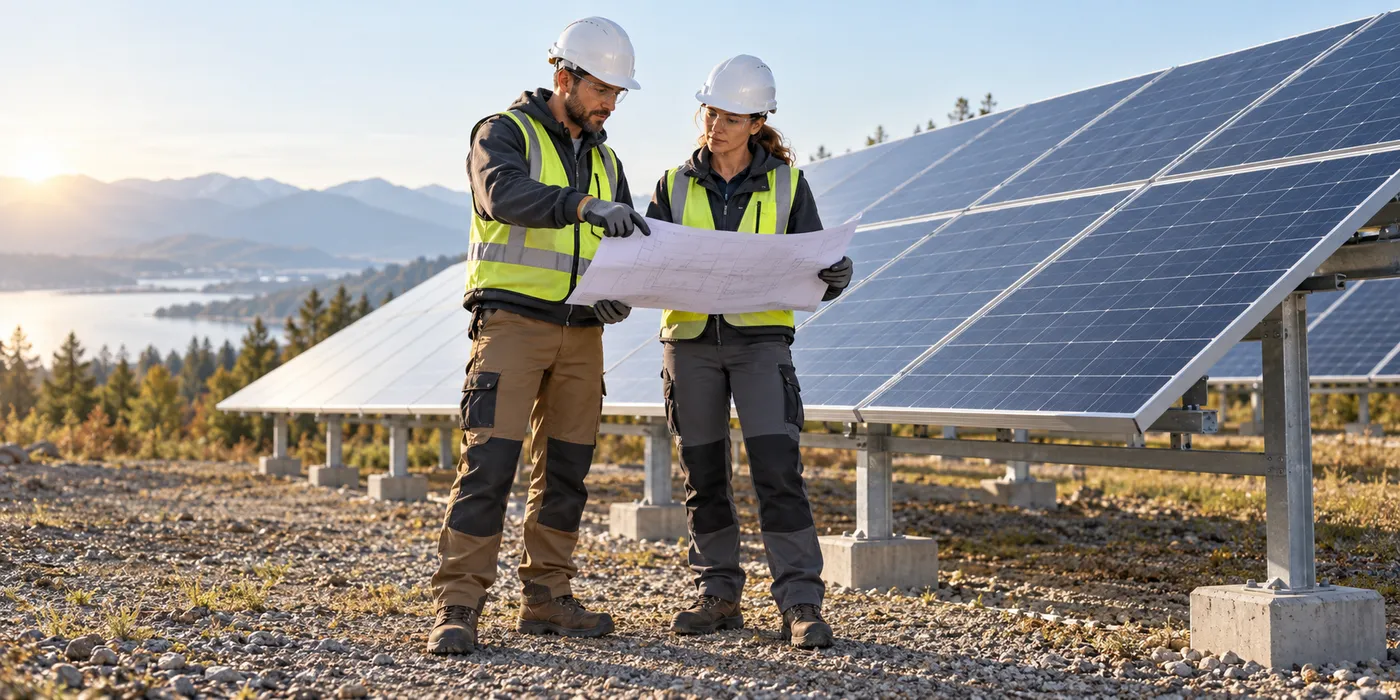
The worksite is a useful place to start. A rooftop installation, a ground mount array, and a solar carport have different access and mounting requirements. Name the site type and system that the employee will work on.
Then describe their part of the project. A role focused on racking and modules can include materials preparation, assembly, assigned installation tasks, and daily records. “Install solar systems” leaves too much of that scope unexplained.
The opening needs to identify:
- The mounting system and module types.
- Materials handling and preparation tasks.
- Racking and module installation duties.
- The drawings and manufacturer instructions used on site.
- Coordination with the crew and other trades.
- Completed-work records and fault reporting.
- The boundary between assigned PV tasks and electrical work.
The BLS solar photovoltaic installer profile describes assembly, installation, and maintenance of PV systems. It also explains that electrical connection responsibilities depend on the job and state requirements. Your description needs to reflect the particular worksite.
Documentation is part of the assignment, too. The next crew needs to know which areas are complete, where materials have damage, and which tasks remain open. Naming those records tells a candidate what daily communication involves.
Solar installer versus solar electrician
A solar panel installer job description can focus on modules, racking, and assigned installation tasks. A solar electrician job description centers on electrical work. Some employees have experience in both, but the title alone does not establish their authorization.
| Assignment | Main focus | What the employer must define |
|---|---|---|
| Mechanical/PV installer | Materials, racking, modules, assigned installation tasks, and records | Site type, mounting system, permitted duties, and supervision |
| Solar electrician | Authorized electrical installation, connections, testing, and records | Electrical authorization, equipment, and testing responsibility |
| Service technician | Inspection, diagnosis, authorized maintenance or repair, and reports | Equipment experience, electrical limits, service territory, and escalation |
| Crew lead | Daily planning, coordination, quality records, and unfinished work | Crew size, decision authority, supervision, and task qualifications |
IREC’s electrician with solar expertise profile describes wiring, equipment, testing, and repair in PV systems. It provides a useful reference for the electrical side of the project.
Before you assign those duties, verify the authorization and supervision required for the location and worksite. A solar training credential does not itself grant electrical authority. A crew-lead title also needs a clear boundary between planning the work and performing or approving electrical tasks.
Required and preferred qualifications
Requirements need to match the work that the employee must perform. Relevant experience can include the site type, mounting system, tools, drawings, and coordination duties. A long list of unrelated qualifications makes the assignment less clear.
If a license or credential is essential, name it precisely. If the company will provide training, explain the training and supervision arrangement. Keep preferences separate from conditions of employment.
Describe the actual tasks and site conditions instead of copying generic requirements for age, gender, strength, or a degree. The candidate needs to understand the work, and the hiring team needs criteria that relate to it.
NABCEP offers associate credentials and board certifications through different pathways. An associate credential and PV Installation Professional board certification are not interchangeable qualifications. Use NABCEP credentials and directories to identify the exact credential and current verification route.
Request the candidate’s credential name and status. Verify electrical licensing separately with the issuing authority. Credentials, personal project experience, and electrical authorization each answer a different hiring question.
The solar installer hiring guide helps employers connect those requirements with the role before advertising it.
Pay, schedule, and site conditions
Candidates need to understand the working week as well as the technical assignment. Publish the actual base pay range and pay basis. Explain overtime and expense reimbursement separately. Electrician pay figures do not represent measured solar-installer wages.
State the reporting location, normal hours, project area, and travel expectations. For project-based work, explain the expected duration and what is known about the next assignment. Avoid implying future work beyond an approved commitment.
Travel terms need more than a percentage. Include overnight frequency, lodging, per diem, vehicle arrangements, and reimbursement. Also explain what tools, equipment, and training the company supplies.
Site conditions belong in the description. Candidates need to know the site type, access arrangements, and actual material-handling tasks. If the role covers several site types, explain the expected split.
When solar projects also include EV charging
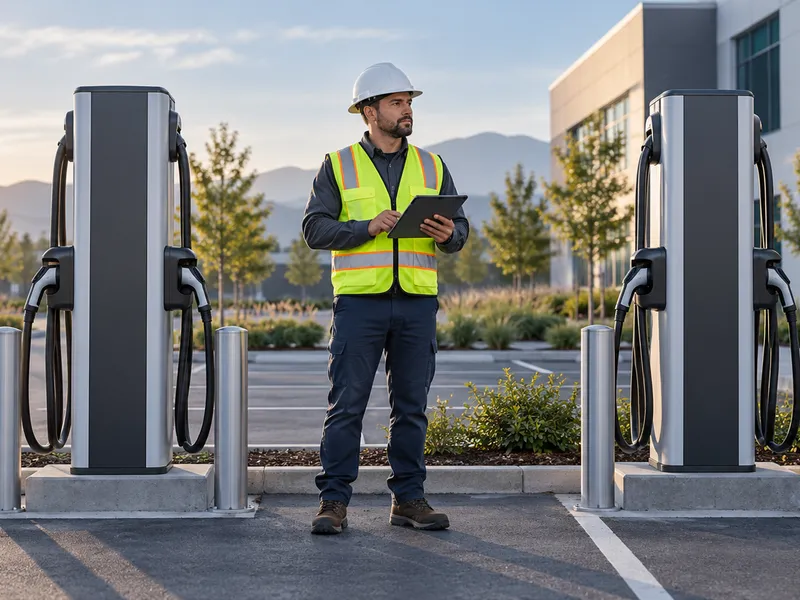
Consider a commercial solar carport with chargers below the canopy. The PV crew and charging team share a site, but they do not automatically share qualifications or responsibilities. This example illustrates a project boundary, rather than a requirement for every PV installer.
Assign an owner for each work package:
| Work package | Responsibility | Handover |
|---|---|---|
| Racking and modules | PV crew with relevant site and mounting experience | Completed areas, installation records, and open items |
| Electrical wiring | Authorized electrical workers with the required supervision | Electrical records and work status |
| Charger installation | Workers qualified and authorized for the selected equipment | Equipment details, installation records, and open items |
| Charger commissioning | Personnel with the required equipment knowledge and authorization | Configuration, commissioning results, and operator handover |
| Ongoing service | The named maintenance or service team | Records, service contacts, and escalation responsibilities |
One company can own several packages. Each employee still needs a defined assignment and the qualifications for that work. PV experience alone does not establish charger installation or service experience.
Use the EV charging technician job description to define the charger role. The guide to hire EV charging electricians supports the separate electrical hiring process. Our broader guide to hiring electricians covers sourcing and applicant follow-up.
Solar installer job description template
Use this example to turn the scope into a job post. Select the site type and keep only the duties that belong to the opening. The bracketed fields hold details that must come from your company and project.
Editable example. This is not an actual vacancy. Replace the bracketed fields before you advertise.
Role and project
- Title
- [Solar PV installer and level]
- Location
- [Reporting point, project area, and travel territory]
- Site type
- [Rooftop, ground mount, or carport]
- Employment
- [Type and expected duration]
- Project scope
- [System, mounting equipment, project phase, and assigned work]
- Supervisor
- [Supervisor title and supervision arrangement]
Duties to adapt
- Prepare materials, tools, and work areas for the assigned tasks.
- Install racking and modules according to the project drawings and manufacturer instructions.
- Complete assigned work within the role’s authorization and supervision.
- Coordinate materials and access with the crew lead and other trades.
- Record completed work and outstanding items.
- Report damaged materials, unclear instructions, and faults to the supervisor.
- Hand over work records and incomplete tasks.
Qualifications and conditions
- Required skills
- [Relevant installation tasks, equipment, drawings, and experience]
- Authorization
- [Electrical requirements or defined supervised scope]
- Site requirements
- [Task-specific training and access requirements]
- Preferred
- [Exact credential or additional experience]
- Base pay
- [Approved range and hourly or salary basis]
- Schedule
- [Normal hours and overtime expectations]
- Travel
- [Percentage, overnight frequency, lodging, and per diem]
- Tools/training
- [Company equipment, employee requirements, and training provided]
- Site conditions
- [Access, height, weather, and material-handling tasks]
- Apply
- [Application route, requested information, and interview steps]
A ground mount opening does not need rooftop experience unless rooftop work is part of the assignment. Review the completed post with the supervisor to remove requirements that do not fit.
Screening questions and where to post
A candidate’s account of one comparable project can reveal more than a general claim of solar experience. Ask which work they personally completed and how that work relates to your opening.
Three useful prompts are:
- Which PV tasks did you personally complete? Listen for the mounting system, site conditions, responsibilities, and supervision.
- How do you document incomplete or faulty work? Listen for the location, condition, action, and owner of the next step.
- What changes when the project also includes chargers? Listen for separate equipment, electrical authorization, commissioning, and service responsibilities.
Use the same core questions for applicants to the same role. Compare their answers with the duties in the post, then verify the required credentials separately.
Best Electrician Jobs offers postings and an employer workspace for electrical and related trade roles. Employers select applicants and verify qualifications. Once the role is clear, post a solar job with the actual scope and terms.
If the crew also needs electricians, read how to recruit electricians for your project. Use separate openings wherever the requirements differ.
Common questions
Is a solar installer the same as an electrician?
No. A PV installer role can focus on modules, racking, and assigned installation tasks. Electrical duties need the authorization and supervision applicable to the worksite. Some workers have qualifications for both roles.
Is NABCEP certification the same as an electrical license?
No. They serve different purposes. Verify the exact NABCEP credential and the relevant electrical authorization separately.
Can solar installers also install EV chargers?
Only with the qualifications, authorization, and supervision required for the assigned charger work. PV experience alone does not establish those requirements.
Should PV installers and electricians use separate job descriptions?
Yes, when the duties, qualifications, supervision, or pay differ. A combined role needs clear responsibilities and the required authorization for each task.
Ready to advertise the opening? Post a solar job on Best Electrician Jobs.